


TL;DR
Biodiversity net gain (BNG) is a mandated planning practice that requires developments to have a positive impact (‘net gain’) on biodiversity, of at least 10%. It’s measured using a statutory biodiversity metric tool, which converts habitat areas and wildlife features into standardised units. This streamlines the process throughout the UK, making ecological protection measurable and more achievable.
You’re working on a planning application, perhaps for a housing development or a business, and then, urgh, jargon. It’s always a faff to get to grips with. I mean what is the ‘statutory biodiversity net gain metric’ anyway? Sprinkle in all of the regulations and legalese, and you have the perfect recipe for a headache. The water you were treading, feels like it’s creeping right up to your eyeballs…
Stop right there. Now’s not the time to let the jargon defeat you, especially with British Flora’s ecology experts in your corner. We’ve been working hand in hand with wildlife trusts, local authorities, landscapers and habitat enthusiasts for years to help them navigate these environmental requirements.
In this guide, I’ll be simplifying biodiversity net gain, how it’s calculated and enforced, so whether you’re a developer, landowner or decision-maker you’ll be confident to see the process through.
Contents:
- What is Biodiversity Net Gain (BNG)?
- Calculating Biodiversity Net Gain
- Top Tips & Resources to Get You started
- Conclusion
- FAQs
What is Biodiversity Net Gain (BNG)?
You don’t need us to tell you how important biodiversity is; it’s the backbone of our food systems, climate resilience, national heritage and, as of the Environment Act 2021, baked into the English planning system.
This landmark piece of legislation codified the concept of ‘biodiversity net gain’, a way of offsetting the ecological impact of development in England by matching it with meaningful steps towards nature protection and restoration. Basically, it means leaving habitats on the site in a measurably better state than you found them. An act of custodianship, if you will.
Since 2024, BNG has been a mandatory requirement for new developments under the amendments to Schedule 7A of the Town and Country Planning Act 1990 (with a few exceptions). In the rest of the UK, the respective parliaments are developing their own policy to the same aim.
You Need to Know the BNG Rules if…
- You’re a developer of large-scale developments
- You’re developing a small site development
- You’re a land manager with your hopes set on selling in the BNG market
- You work in a local planning authority (LPA)
Come November 2026, the regs will also apply to nationally significant infrastructure projects (NSIPs), although the fine print diverges. Sounds relevant? Then allow me to point you toward the government guidance.
The Specific Requirements of BNG
You’ve likely heard of ‘leave no trace’ as it pertains to the countryside code. Well, BNG takes it further, mandating that new developments actively enhance nature, or at the very least, counterbalance any disruption to local habitats.
Under planning legislation, developers must deliver a 10% increase in biodiversity value to the onsite habitats, which is upheld over 30 years. This can be achieved via…
Biodiversity Gain Hierarchy
- Onsite biodiversity gains (within the red line boundary of the site), be they acts of urban rewilding like nature corridors, pocket parks, green roofs and wildflower meadows, or more traditional flower beds and street trees.
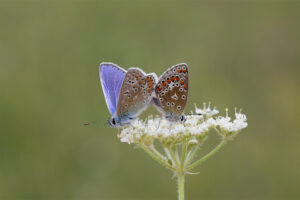
- Offsite biodiversity gains to ‘top up’ the site if it can’t achieve 10% in of itself; in other words, compensating for ecological damage by funding habitat creation and restoration beyond the development site. A nice example would be supporting butterfly banks suffused with nectar-rich plants for butterflies and other pollinators with Butterfly Conservation .
- A mix of the above.
- Buying statutory biodiversity credits from the government who will then invest the funds in habitat creation projects across England. Note that this is a complete last resort, and should focus on local initiatives as close to the development as possible.
Biodiversity Gain Plans
Because these stipulations fall under a ‘pre-commencement condition’, once you clinch the planning permission from the authorities, you’ll also need to submit a Biodiversity Gain Plan before any work can start.
This document should illustrate exactly how the developer in question will fulfil its BNG duties and contain their completed biodiversity gain metric calculations in full as evidence of due diligence. (More on that later).
What Sorts of Development Does BNG Apply to?
BNG governs most residential and commercial developments in England, although a series of exemptions exist.
For the sake of brevity, I won’t divulge the whole list, but do note that small-scale household projects – think home extensions, conservatories, loft conversions or garden modifications like a retaining wall – escape BNG’s attention.
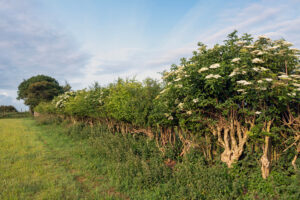
Similarly, if the development doesn’t impact a priority habitat and affects less than 25m2 of on-site habitat / 5m of linear habitat such as hedgerow plants, you’re safe to continue minus a BNG evaluation. Lucky you.
How Does One Go About Calculating BNG?
Finally, we’re onto the meat of this guide. Biodiversity net gain is measured using a statutory biodiversity metric tool, which converts habitat areas and wildlife features – woodlands, grasslands, wetlands and watercourses – into standardised ‘units’. That might sound impossible, but weirdly, it works.
For instance, a large, species-rich ancient meadow is worth much more than the same-sized area of closely mown grass because it supports far more wildlife.
The biodiversity metric does exactly this, but systematically and consistently throughout England. Rather than counting every plant and animal, it uses habitats as a proxy for biodiversity. Each habitat is assigned a value based on how important it is ecologically, in terms of size, age, distinctiveness, condition and location.
Logically, then, a developer can’t fell an ancient forest to replace it with a lawn (read monoculture); value-wise it has to be a like-for-like replacement. And, of course, many habitats are simply irreplaceable. Here, their existing protections, such as the Area of Outstanding Natural Beauty (AONB) designation, override the use of the biodiversity metric.
How the Metric Works in Practice
You have the overview, but what does the step-by-step look like? Let’s go over it.
1. First, Check Which Metric You Need
Depending on the nature of the site, you may require a slightly different methodology. But don’t worry, the documentation accounts for this.
Put short and sweet, you’ll need to use the up-to-date Statutory Biodiversity Metric tool for mandatory BNG calculations, but if you’re working from a small site, you may use the Small Sites Metric; albeit not where priority habitats, protected sites or European protected species are present.
2. Get A Competent Person Involved
For most projects, this should be an ecologist. After all, biodiversity is their specialism. In my experience, I’ve seen the LPA reject calculations when they thought that they hadn’t been completed by a ‘competent person’ with the appropriate knowledge and experience, so be warned!
3. Map The Existing Site
Divide the site into separate ‘habitat parcels’. Not brown boxes, but individual zones containing one habitat type, such as woodland, grassland, scrub, pond, hedgerow or watercourse. For on-site calculations, you must include everything within the red line boundary, even those features you intend to retain.
4. Collect Baseline Data for Each Habitat Parcel
For each parcel, take stock of:
- Habitat type
- Size, in hectares, square metres, kilometres or metres
- Habitat condition
- Strategic significance, e.g., whether it’s identified in a local nature recovery strategy or other relevant initiative
5. Enter the Baseline Information Into the Tool
Now, put the existing habitats into the baseline/on-site section of the spreadsheet. The tool then calculates the site’s starting biodiversity value in what the legislation terms ‘biodiversity units’.
6. Enter What Will Happen to Each Habitat
For each existing parcel, you’ll then have to record whether it will be:
- Retained;
- Enhanced;
- Lost;
- Replaced;
- Or affected temporarily
This, as you might’ve already gleaned, shows the biodiversity impact of the proposed development section by section.
7. Add Proposed New or Enhanced Habitats
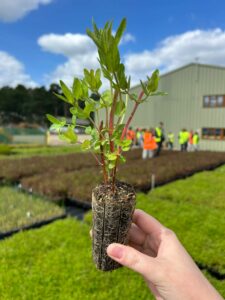
Enter any habitats you will create or improve after development, such as wildflower grassland, woodland planting, new ponds, hedgerow restoration or watercourse enhancements.
8. Set the Target Condition and Timescale
For created or enhanced habitats, the tool accounts for how difficult the habitat is to create or improve, how long it will take to reach its target condition, and how far it is from the habitat loss.
9. Check the Tool’s Headline Results
Press enter, and the tool will show:
- Baseline biodiversity units
- Post-development biodiversity units
- Total net change
- Percentage net gain or loss
- Whether the 10% BNG target has been achieved
10. Check the Trading Rules
Don’t stop at the pure percentage. The tool also checks whether lost habitats have been replaced appropriately, and your changes need to reflect that. Remember earlier? Higher-value habitats generally need like-for-like or better compensation.
11. Refine the Design
The government strongly advises using the tool repeatedly and early on in the design, rather than a one-off. If the project doesn’t hit 10%, adjust the scheme: retain more habitat, improve on-site habitats, create more habitat, or change the layout.
12. Add Off-Site Gains If Needed
If you’re certain that 10% BNG can’t be feasibly achieved on-site, you must account for the loss by adding off-site biodiversity units, either on other land controlled by you, the developer, or from a registered off-site gain provider.
13. Use Statutory Credits Only as a Last Resort
When on-site and off-site options fail, and you still can’t scrape the requirement, statutory biodiversity credits may be used as a last resort. And only as a last resort.
14. Save the Final Version
A nifty feature of the BNG metric tool is that it allows iterations such as version 1.1, 1.2 and 1.3. Take advantage of that and iterate as needed, until you’re happy with the outcome. All that’s left then is to submit the final version along with the biodiversity gain plan to the LPA
Top Tips & Resources to Get You Started on Your Biodiversity Gain Plan
- Always start by studying the GOV.UK guidance; it has the full scope of the legislation and is the most authoritative source on the topic
- Learn the metric before opening Excel. Yes, going in blind, is only going to add time and frustration to the process.
- Always aim above 10%. This way, you’ll certainly hit the minimum requirements and you’ll align with the initiatives of plenty of LPAs and English trusts.
- Look at a handful of real examples to inform your own process.
- If in doubt, reach out to a specialist, be they an ecologist or an organisation like the Wildlife Trust who offer end-to-end BNG services.
Conclusion: Development & Nature Stewardship Aren’t Mutually Exclusive
See? You managed to muddle through! I hope you feel much more confident for it.
If there’s anything you should take away from this guide, it’s that red tape and green spaces needn’t clash. To meet the needs of this country, now and in the future, we’re going to need more development: homes, services, infrastructure and business. Opposing every new project can only get us so far.
The challenge, then, isn’t whether we should develop, but how we develop. That’s why Biodiversity Net Gain is utterly crucial; by ensuring development leaves nature replenished rather than dwindling, it shows that growth and environmental stewardship can go hand in hand. And it ought to, since our economy and communities depend on it.
Curious to learn more? We’d be delighted to support your BNG progress. Just give us a ring – it’s our mission to bring biodiversity back to Britain.
The statutory biodiversity metric is the government’s official tool for measuring the biodiversity value of a site before and after development. It converts habitats such as woodlands, grasslands, hedgerows and watercourses into biodiversity units, helping determine whether a development achieves the mandatory 10% Biodiversity Net Gain (BNG).