

TL;DR
Planting pollinator plants in UK gardens and green spaces helps support bees, butterflies and other insects that keep ecosystems and food production functioning. Choosing the best plants for pollinators in the UK, especially native wildflowers that bloom across seasons, can quickly turn even small areas into valuable wildlife habitats.
Ecosystems are built on reciprocity, a veining network of mutual exchange, sharing, and connection underpinning the natural world. One of the most clear-cut examples is the symbiosis between pollinators and plants; British insects trade their labour for nectar, a swap benefitting both parties and the biome they call home.
However, as vast as these webs are, they are also delicate. To counter growing biodiversity loss and all its knock-on effects, we humans have got to practice reciprocity ourselves. This could take many forms: litter-picking, restoring depleted habitats, recording wildlife, or simply taking the time to reconnect with nature.
But, in this guide, I’ll be focusing on the smallest, practical steps – growing pollinator-friendly plants to encourage these essential critters back into our green spaces, be they your back garden, local conservation area, or even in the heart of the city.
Contents:
- Why Pollinator Plants
- British Flora’s Round-Up: The Best Plants for UK Pollinators
- Quickfire Pollinator Planting Advice
- Conclusion
Pollinator Plants: What’s All the Buzz About?
In 2026, the outlook for British pollinators is looking particularly stark. Since the latest State of Nature Report recognised the UK as one of the most nature-depleted countries globally in 2023, our ecosystems have largely continued to deteriorate or show no change.
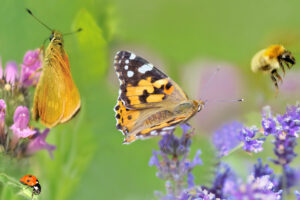
For our native pollinators – bees, wasps, moths, butterflies, hoverflies, beetles, and more – this means shrinking habitats, a loss of food sources and declining populations, which collectively spell out a credible threat of extinction.
Why Insect Loss Matters
It’s well-established that biodiversity loss is a bad thing, but beyond losing the beautiful species native to the British Isles, many can’t put their finger on what it means in practice.
The long and short of it is that insect life, however tiny, upholds the planet’s ecosystems. If you take away just one keystone species, everything else comes tumbling down: their predators suffer, pests breed out of control, plants remain unpollinated and can’t reproduce.
These impacts ripple outwards to undermine major food production, global climate resilience, water and weather cycles. Given that 85-95% of the UK’s insect pollinated crops rely on wild pollinators, it’s also a huge blow to the economy.
The Role of Pollinator Plants
Despite the circumstances, there is a glimmer of hope. Through conservation and restoration initiatives, we can reverse the damage and see the environment thrive – indeed, at British Flora, it’s our mission. By passionately sharing our knowledge of native wildflower plants and seeds, we’re stoking the curiosity, goodwill and public awareness growing around the urgent need for biodiversity net gain.
One offshoot of these efforts is supporting wildlife trusts, conservation groups, local authorities and businesses to create habitats full of nectar-rich, native plants for pollinators, but really anyone can get stuck in.
In fact, scientists from Lancaster University have found that even small-scale pollinator friendly planting brings tangible benefits, making even the smallest urban sites and scraps of wasteland cornucopias for these essential critters. From a planning perspective, it’s a win-win: more connected, nature diverse pockets for wildlife and more pleasant environments for people, too.
British Flora’s Round-Up of the Best Plants for UK Pollinators
By no means is this an exhaustive list, but I’ve curated these native pollinator plants to cover a breadth of uses and habitats. Shrubs, annuals, bulbs and perennials – there’s something for everyone.
Shrubs
Heather (Calluna vulgaris)
A popular evergreen undershrub sometimes known as ‘ling’ that flowers from August to October, with loosely arranged flowers in pink, purple and white. Extremely hardy, these plants need moist, acidic soil to thrive and attract the Silver-Studded Blue butterfly.
- Habitat: Heathland, moorland, bogs, woodland with acidic or peat soils
- Likes: Full sun, moist acidic soil
Dislikes: Dry soils - Planting Season: Spring
Annuals
Cornflower (Centaurea cyanus)
An iconic meadow annual with expressive blue flowers that brighten wildlife gardens and restoration projects alike. Classically combined with other vivid shades – in our mix, with poppies – it was introduced to the UK from the Mediterranean thousands of years ago and is now considered ‘naturalised’. Its open, ruffled blooms, rich in nectar and easily accessible to pollinators, appear from June to August.
- Habitat: Meadows, field margins, wildflower gardens
- Likes: Full sun and well-drained soils
- Dislikes: Heavy shade
- Planting Season: Spring or autumn
Field Geranium (Geranium pratense)
Bearing purple five-petaled blooms, the Field Geranium stands firmly at 30-60cm thanks to its clumped growing pattern. Suited to a variety of soil qualities and resistant to cold temperatures of up to -20, it’s considered extremely hardy and, as a result, is often the pollinator plant of choice for landscaping projects.
- Habitat: Meadows, verges
- Likes: Full sun or partial shade, well-drained soils
- Dislikes: Shady areas
- Planting Season: Spring
Corn Cockle (Agrostemma githago)
Once a familiar sight in traditional cornfields, this striking annual bears tall stems and large magenta flowers during summer. It is often reintroduced in wildflower meadow projects to restore historic farmland flora, but you’ll also see it at roadsides, railway lines, wastelands and other disturbed areas.
- Habitat: Arable field margins, wildflower meadows
- Likes: Sunny, well-drained soil
- Dislikes: Waterlogged ground
Planting Season: Spring or autumn
Bulbs
Snowdrop (Galanthus nivalis)
Among the first flowers to bloom in late winter, snowdrops provide a crucial early nectar source when little else is available. Their nodding white flowers attract emerging bees and other insects on mild days. They are commonly planted in woodland edges and naturalised lawns.
- Habitat: Woodland, hedgerows, shaded lawns
- Likes: Moist but well-drained soils and partial shade
- Dislikes: Hot, dry conditions
- Planting Season: Autumn
English Bluebell (Hyacinthoides non-scripta)
One of Britain’s most recognisable woodland flowers, whose springtime blooms produce fragrant violet-blue carpets that can be seen for miles. Bluebells offer nectar for bees, butterflies and hoverflies emerging after winter. They are ideal for woodland planting and shaded naturalistic landscapes.
- Habitat: Woodland, hedgerows, shady banks
- Likes: Moist, humus-rich soils and partial shade
- Dislikes: Dry or exposed sites
- Planting Season: Autumn
Ramsons or Wild Garlic (Allium ursinum)
Primarily known as wild garlic, this aromatic plant attracts bees and people in equal measures, with its strong fragrance and white, star-shaped flowers. Found in many of Britain’s ancient woodlands, it has a long culinary history and naturally deters aphids with its pungent scent.
- Habitat: Woodland, shady gardens
- Likes: Moist, shady conditions
- Dislikes: Dryness
- Planting Season: October–March
Perennials
Meadow Buttercup (Ranunculus acris)
One of the UK’s most iconic pollinator plants, Meadow Buttercup is identifiable by its bright yellow, five-pronged flowers, tall stems and round leaves. Curiously, it grows where it is not eaten; thus, most commonly in the pastures of grazing animals to whom it is poisonous. Pollinators, however, love the plant and, given its abundance, rely on it as an important source of nectar.
- Habitat: Damp meadows, grassland, wildlife gardens
- Likes: Full sun, partial shade
- Dislikes: Dryness
- Planting Season: Autumn or early spring
Devil’s-Bit Scabious (Succisa pratensis)
The oddly named Devil’s-Bit Scabious has a distinctive flat edge that, in folklore, is said to have been chomped by the devil himself. Either blue or purple in colour, it grows up to 100cm and features a domed terminal head. It’s of the best UK-native plants for butterflies, attracting the Marsh Fritillary as its main food source.
- Habitat: Marshes, wet heathlands, fens and woodland
- Likes: Damp soil
- Dislikes: Drought-prone soil, high-competition fertile soil
- Planting Season: October–March
Birdsfoot Trefoil (Lotus corniculatus)
A low-growing perennial with clusters of bright yellow flowers, often tinged with red when budding. Named after its fruit’s that spread like a bird’s foot when ripened, it’s an essential nectar plant for bees and butterflies and serves as a larval food plant for several butterfly species – hence why its included in our butterfly and moth seed mix.
- Habitat: Meadows, grasslands, coastal slopes
- Likes: Full sun and poor to moderately fertile soils
- Dislikes: Very fertile or waterlogged soils
- Planting Season: Spring or autumn
Quickfire Pollinator Planting Advice
From private gardens and communal green spaces to city centres and abandoned sites, any piece of land has the potential of becoming a refuge for pollinators. Here are some quickfire tips for creating a wildflower-rich habitat, wherever you’re based.
- Choose a mix of plants that flower in different seasons for continuity of food sources
- Leave patches of the land untouched to grow wild
- If you do regularly cut and maintain lawns, use curved mowing patterns to support bees and butterflies, but limit mowing where possible
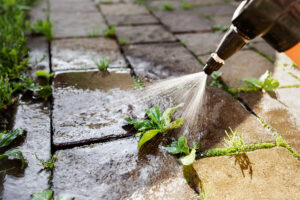
- Ditch the pesticide and consider natural alternatives
- Build bug hotels or wildlife tipis and introduce lots of little hidey holes amongst the plants
- Establish ponds filled with British marsh plants, using grasses and other native pond edge species for natural cover against predators
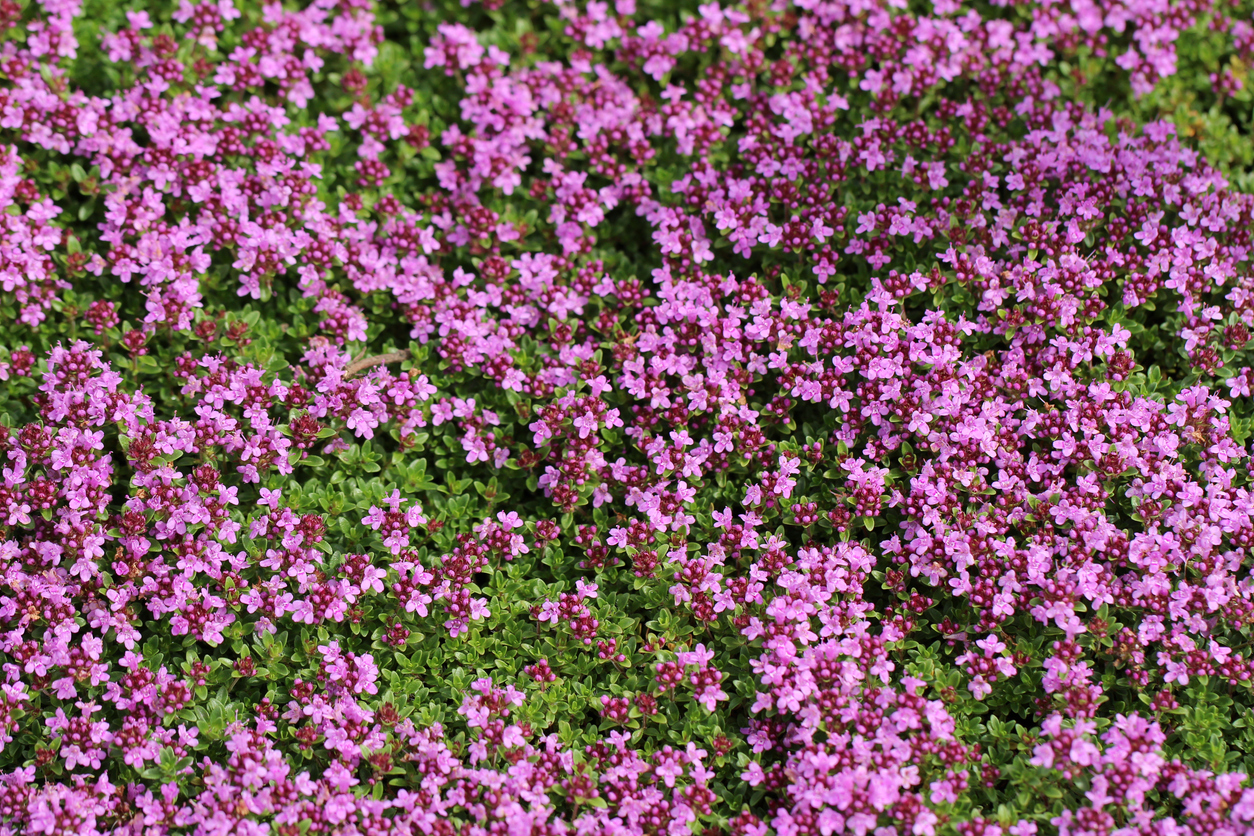
- Incorporate pollinator plants that deter cats, like lavender and wild thyme, to protect wildlife
Conclusion: We All Need to Muck In
Restoring Britain’s dwindling flora and fauna is a mammoth task, requiring everyone to muck in, but if we take it step-by-step, together, we can make a tangible difference.
If you’re curious about getting the ball rolling by growing pollinator plants in your area – either individually or on behalf of an organisation – don’t hesitate to get in touch. Our friendly team is happy to advise on your requirements, from plant species to habitat suitability.
Discover our pollinator-friendly plants today.