

TL;DR
Biological diversity, or biodiversity, is important because it helps all living organisms live and thrive. A more diverse ecosystem is more resilient to disturbances like drought, disease, pests and human disruptions, and is the keystone to our food systems, medicine, climate, resilience, air quality, and public wellbeing.
Something clicks in your brain when you realise the momentous role biodiversity plays in both the UK and globally. This vast network of living organisms is densely connected, not just to our food systems, environment and the air we breathe, but to our culture and very sense of identity. Without it, society as we know it would look very different. But exactly why is biological diversity so important, and what does it really mean in practical terms?
To answer these central questions, I’ll first lay out some helpful context, covering the ‘what’ before I get to the ‘why’. Stick around until the end, because I’ll also be sharing ways you (as an individual or a member of an organisation) can muck in to help out.
Contents:
- What Is Biological Diversity?
- UK Biodiversity Context
- 11 Reasons Why Biological Diversity is Important
- The Silver Lining: Restoration Examples Happening Now
- Practical Ways to Support Biodiversity
- Conclusion: Improve It, Or Lose It
What Is Biological Diversity?
Biological diversity, more commonly known as ‘biodiversity’, is simply the number, variety and variability of the different species an ecosystem supports. This includes all types of organisms, from the gigantic to the microscopic: plants, birds, mammals, insects, fish, fungi, bacteria, humans, the list goes on…
In the UK, farmland makes up 52% of land cover, meaning that the majority of our biodiversity comes from a scattering of smaller ecosystems; namely, woodlands, moorlands and heathlands, wetlands and marshes, grasslands and coastal areas.
That said, it’s not a pure numbers game; biological diversity is just as concerned with the balance of species, their genetic variation and how they interact within their environment to sustain themselves and each other. Thus, it can be categorised as follows:
- Species diversity: the assortment of different species in a set area.
- Genetic diversity: variation within species, like genes, traits and adaptations.
- Ecosystem diversity: how different ecosystems or habitats vary within regions.
A Little Background: Where We Are & How We Got Here
I hate to be the bearer of bad news, but on the biodiversity front, it’s not looking good for the UK. Britain is one of the most nature-depleted countries in the world according to landmark State of Nature data, with one in six species at risk of extinction. Of these, invertebrates, birds, amphibians, reptiles, fungi and lichen are being hit particularly hard. Even much loved farmland birds like the iconic lapwing (down by 90%) are a dwindling sight.
This begs the question, why?
Well, if you were thinking human activity, you’re right on the money. Air and plastic pollution, the use of pesticides and ‘forever chemicals’, deforestation, overfishing, habitat destruction and mushrooming emissions and their by-product, climate change, are collectively bringing nature to the brink. And, because each species is so delicately intertwined, if a few species go, it could spell disaster for countless more.
In response, the UK government has formally committed to 30 by 30, a global initiative designed to ensure at least 30% of land and sea is safeguarded for restoration and conservation efforts. To see why this biodiversity protection is so important, let’s get to the crux of the issue…
Reasons Why Biological Diversity is Important for the Planet and Humans Too
Often, the ocean is referred to as ‘the planet’s lungs’. Following that analogy, then, biodiversity is the veins; the lifeblood of our planet underpinning the natural processes that support all life on Earth.
The key idea you need to grasp is that the interactions between species are mutually reinforcing: a more diverse portfolio of species translates into a more resilient, stable ecosystem, which actively helps its inhabitants thrive. It’s this complex tapestry of living beings that keeps our environment healthy and diverse.
Now, it’s time to dig into some specific examples.
Ecosystem Benefits
1. More Insect Species = Greater Pollination
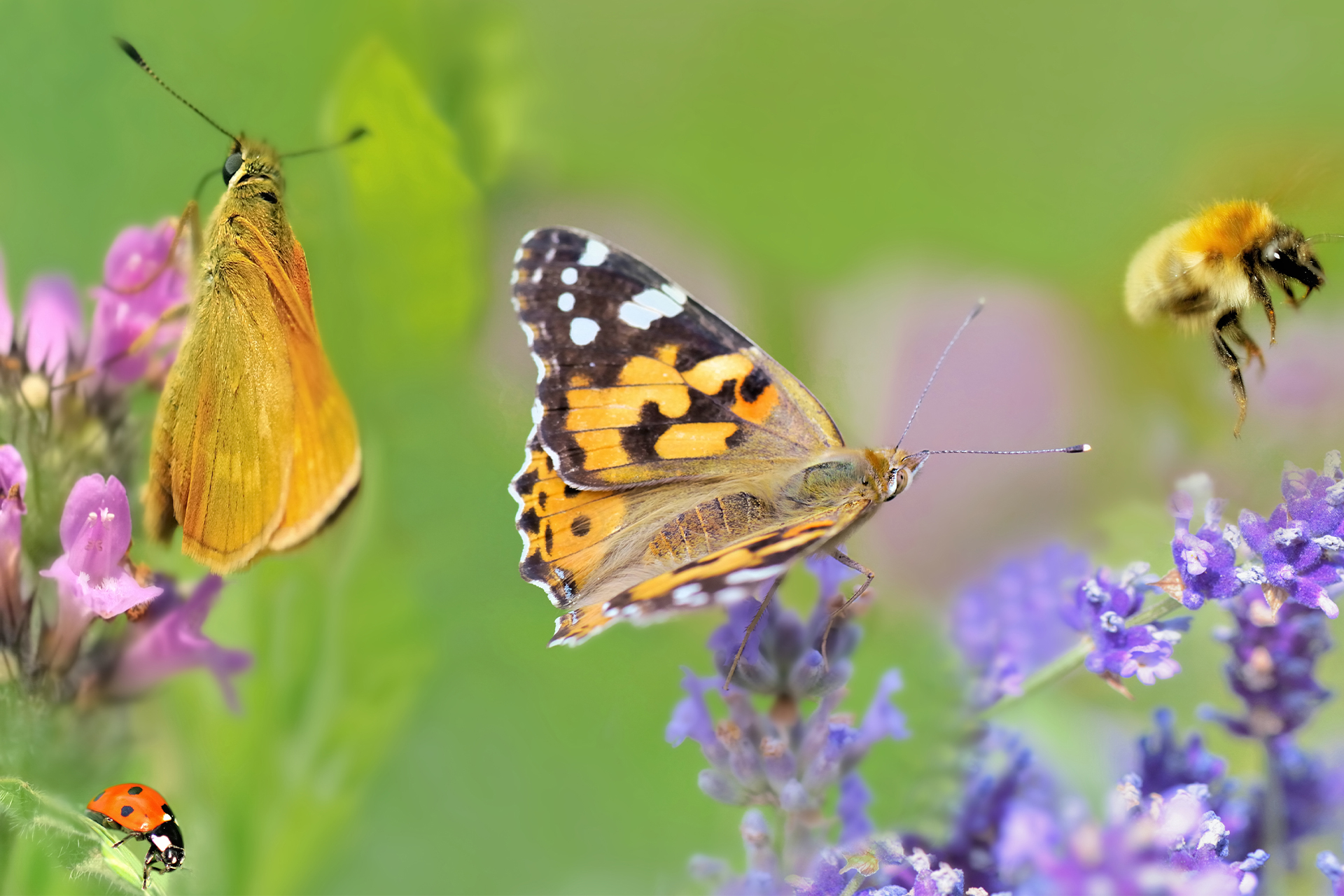
Pollinators may be small, but, unwittingly to some, they play an essential role in our lives. Ensuring that plants reproduce via pollination, they do the invisible grunt work that ensures our trees, bushes, flowers, and crops grow. And the more plants, the more food sources these insects can tap into – talk about complementarity!
2. Natural Pest Control
In a diverse ecosystem, many species often perform similar functions; for instance, decomposers, pollinators and predators feeding on the same prey. When things fall out of kilter through species loss, there aren’t enough organisms to sub into these roles, leading to an unbalanced ecosystem.
To give you a concrete example: in a monoculture, like a single crop farm, if a pest arrives, the entire system is at risk of collapsing. Likewise, with many of Britain’s natural predators in decline, rabbit, wood pigeon and deer populations have exploded.
3. Flood Prevention
Diversity-rich ecosystems are also better prepared for all sorts of weather events, from droughts and wildfires to increasingly occurring floods. Trees, bushes, wetlands and wild grasslands all play their part in slowing down water flow and keeping rainfall locked in their root networks and the soil.
4. Carbon Capture
It’s well documented that trees are an essential ingredient in the fight against climate change; their photosynthesis absorbs carbon dioxide from the atmosphere and keeps our air cleaner. Bogs, peatlands and moors are equally important. In fact, they’re the largest natural terrestrial carbon store, trapping billions of tons of CO2 in the soil around the globe. Hence why heather burning is so controversial.
Human & Community Benefits
5. Public Wellbeing
Many of us have an intrinsic desire to protect nature – to see the world’s billions of species thrive, but also for more selfish reasons. There’s a clear correlation between spending time in green spaces and positive mental health impacts, so why not make these environments as healthy and diverse as possible?
6. Cultural Heritage & History
Many of the species we’re seeing decline – red squirrels, pine martens, Scottish wildcat, European badgers, and our ancient woodlands – are iconic symbols of the British countryside. But their value goes beyond the surface level observation, ‘they look nice’. As the felling of the 200-year-old tree at Sycamore Gap proved, nature is personal, an essential piece of our cultural heritage.
7. It’s Good for the Economy (Agriculture, Medicine, Tourism)
Biodiversity net gain is rooted in the stewardship of the land, but it’s also an important way of stimulating the economy. Diverse ecosystems allow for more efficient resource use, as different species have varying niches – for example, rooting and flowering at different times and relying on different food sources.
This reduces competition and allows the community to capture more nutrients, light, and water, leading to higher overall productivity. This translates into better pollination, which improves crop yields, more medicinal plants for the global pharmaceutical industry, and more beautiful landscapes that attract tourists from far and wide.
8. An Unexpected Element of the UK’s National Security
You might not realise it, but biodiversity’s importance is intimately tied to our national security. As government intelligence chiefs have recently warned, the mounting ecological emergency may lead to mass migration, food shortages and price rises, and global disorder if left unchecked. As such, maintaining it is not simply an environmental concern, but equally one of security, prosperity and resilience.
Risks of Biodiversity Loss
9. Preventing Climate Change Acceleration
Biodiversity loss doesn’t just impact councils, developers and land managers and their contracts; it directly correlates with climate change. Without our natural safeguards against growing emissions – carbon stores in peatlands and woodlands, to name but one example – we’re much more vulnerable to its effects. Think of it as a feedback loop.
10. Air & Water Pollution
High biological diversity also helps prevent and mitigate pollution by maintaining healthy, functional ecosystems that naturally filter air, soil and water. Diverse ecosystems, such as wetlands and forests, act as carbon sinks and break down nasty contaminants.
11. Habitat Destruction & Species Decline
Last but not least, biological diversity is important because once it becomes low, habitats and species are at risk of decline. Alongside all of the benefits listed above, it would be a serious shame to lose the weird and wonderful species that make our world so beautiful.
The Silver Lining: Restoration Examples Happening Now
Besides the ‘30 by 30’ target I mentioned earlier, there are countless campaigns and action groups working around the clock to build the UK’s biodiversity back up.
For instance, many councils up and down the country are partnering with Bug Life to instil ‘B lines’ throughout neighbourhoods and working with wildlife trusts to manage roadside nature reserves and wildflower meadow creation projects. Kent County Council is a great example here.
On the macro level, groups like Rewilding Britain are creating rewilding networks across the nation, connecting self-organised groups with landowners and farmers, whilst the government is pouring £90 million into species recovery projects. To do our bit, at British Flora, we’re working alongside National Trust sites, wildlife trusts and butterfly conservation groups to deliver native seeds for rewilding, including Red List varieties that are essential for conservation.
Practical Ways You Can Support Biodiversity
A huge rewilding project might not be feasible for the average person, but there are ways to get involved on a small scale. For one, you could try planting native, nectar-rich plants for pollinators in your garden or build a small pond for amphibians. Likewise, you could participate in local litter picks or get involved in a campaign near you. Even tiny steps, like wiping down your bird feeders to prevent the spread of bird flu, have an outsized impact.
Conclusion: Improve It, Or Lose It
So, why is biological diversity important? It sounds drastic, but it’s because biodiversity supports all life on earth.
Even losing just a handful of keystone species can cause ecosystems to collapse under their weight: flora rely on pollinators to reproduce, animals need reliable food sources in the form of prey and plants, and without predators, pests breed out of control. Looking at the knock-on impact on human infrastructure, food systems and medicine, one thing is clear: without a diverse, thriving environment, we all go hungry.
But, remember, it’s not all doom and gloom; reversing the damage is both possible and achievable. And we all have a role to play. My recommendation is to start small and scale out. Take stock of your connections and see where you can make the largest difference – at work, within your community, at home? Even urban rewilding has shown to have an impact. So, explore planting options today – starting with native British seeds.